
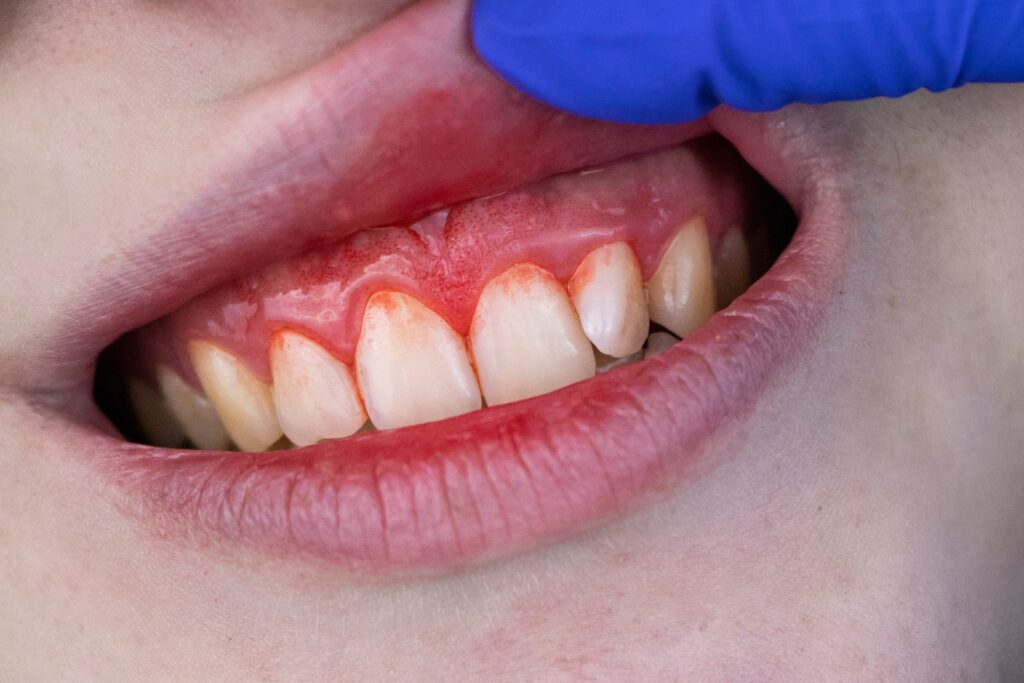
Periodontal simply means “the tissue around the teeth”. Plaque is the most common element causing gum disease.
Gum disease describes swelling, soreness or infection of the tissues supporting the teeth. There are a number of periodontal diseases affecting the tissues supporting the teeth.
Gingivitis means inflammation of the gums. This is when the gums around the teeth become very red and swollen. Often the swollen gums bleed when they are brushed or flossed during cleaning.
Long-standing gingivitis can turn into periodontitis. There are a number of types of periodontal disease and they all affect the tissues supporting the teeth. As the disease gets worse the bone anchoring the teeth in the jaw is lost, making the teeth loose. If this is not treated, the teeth may eventually fall out.
All gum disease is caused by plaque. Plaque is a film of bacteria which forms on the surface of the teeth and gums every day. Many of the bacteria in plaque are completely harmless, but there are some that have been shown to be the main cause of gum disease. To prevent and treat gum disease, you need to make sure you remove all the plaque from your teeth every day. This is done by brushing and flossing.
Unfortunately, gum disease progresses painlessly overall so that you don’t notice the damage it is doing. However, the bacteria are sometimes more active, and this makes your gums sore. This can lead to gum abscesses, and pus may ooze from around the teeth. Over a number of years, the bone supporting the teeth can be lost. If the disease is left untreated for a long time, treatment can become more difficult.
The earliest sign is often blood on your toothbrush when cleaning your teeth. Your gums may also bleed while you are eating, leaving a bad taste in your mouth and your breath may also become unpleasant.