
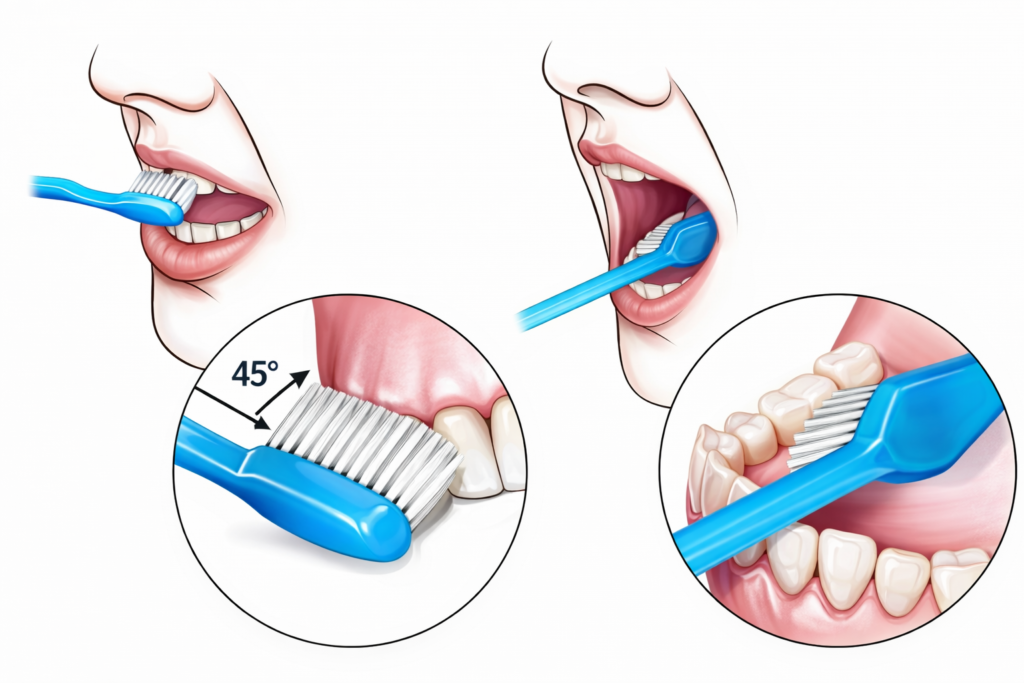
Use a toothbrush with soft bristles and a small strip of fluoride toothpaste. When you brush your teeth, move the brush in small, circular motions to reach food particles that may be under your gum line. Hold the toothbrush at an angle to the gum and brush slowly and carefully, covering all areas between teeth and the surface of each tooth. It will take you several minutes to thoroughly brush your teeth. Brush the outside, inside and chewing surface of your entire front and back teeth. Brush your tongue and the roof of your mouth.
Brush your teeth two times daily to avoid the accumulation of food particles and plaque and to reduce your risk of tooth decay:
1. In the morning after breakfast
2. At bedtime
As soon as the bristles start to wear down or fray, replace your toothbrush every 3 months. Do not swallow toothpaste. It is important to carefully floss and brush daily for optimal oral hygiene.
To get the maximum benefit from your fluoride toothpaste – spit the excess toothpaste out after brushing but do not rinse.
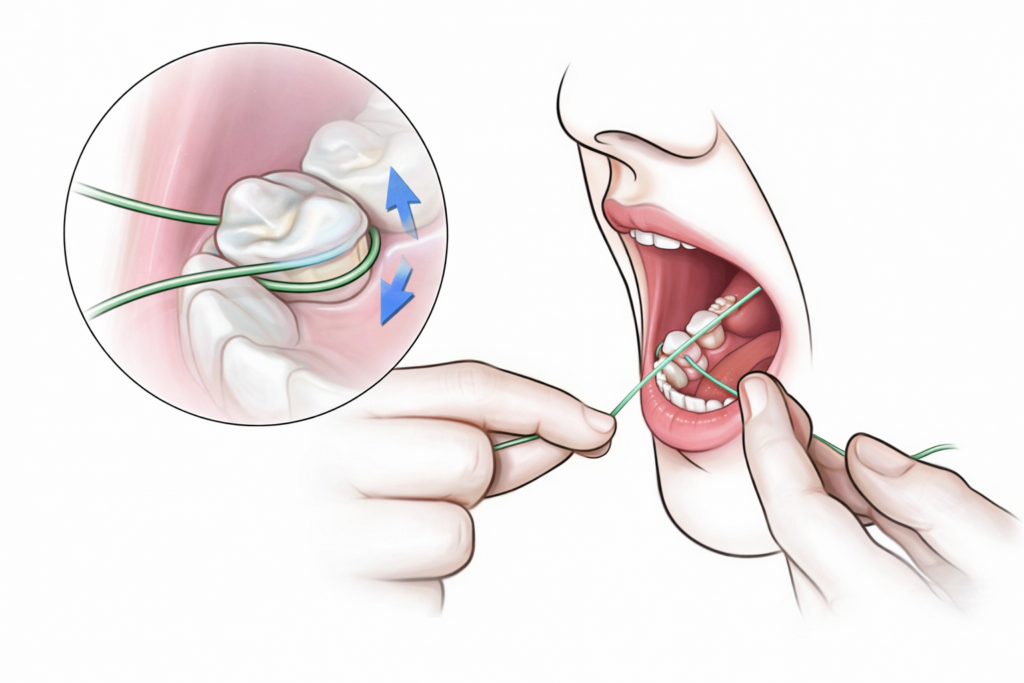
For areas between the teeth that a toothbrush can’t reach, dental floss is used to remove food particles and plaque. Dental floss is a thin thread of waxed nylon that is used to reach below the gum line and clean between teeth. It is very important to floss between your teeth every day.
Pull a small length of floss from the dispenser. Wrap the ends of the floss tightly around your middle fingers. Guide the floss between all teeth to the gum line, pulling out any food particles or plaque. Unwrap clean floss from around your fingers as you go, so that you have used the floss from beginning to end when you finish. Floss behind all of your back teeth.
Floss at night to make sure your teeth are squeaky clean before you go to bed. When you first begin flossing, your gums may bleed a little. If the bleeding does not go away after the first few times, let a staff member know at your next appointment.
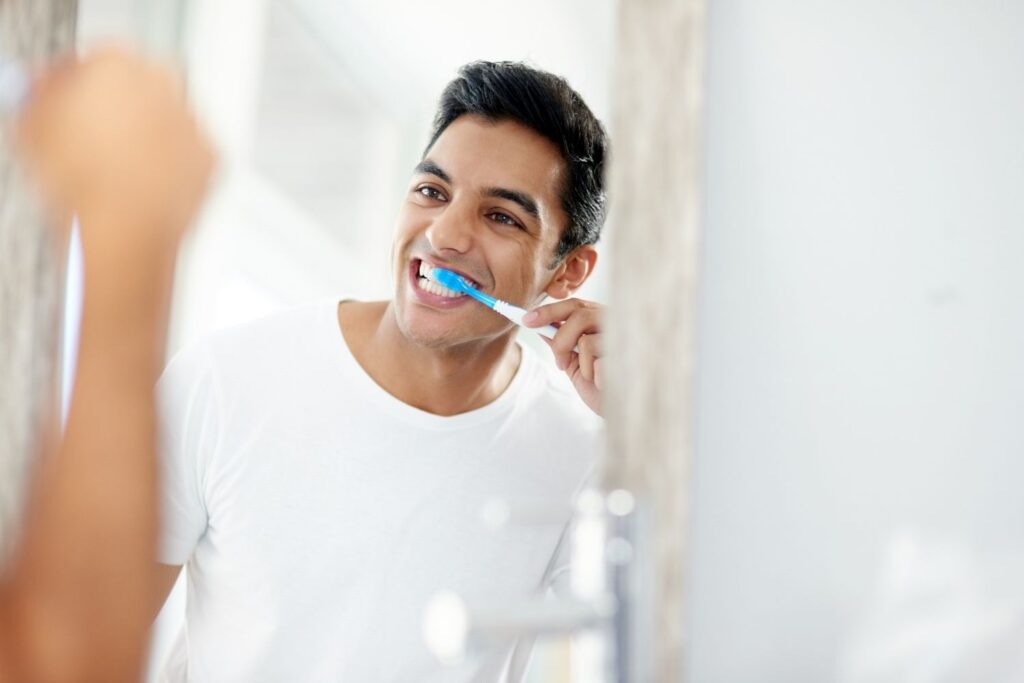
There are two primary reasons to practice good oral hygiene during orthodontic treatment:
First, to keep your teeth and gums clean so you can prevent tooth decay and gum recession. (Keeping your teeth clean is essential for this reason, whether or not you are undergoing orthodontic treatment.)
Clean teeth and healthy gums will promote better tooth movement with a healthier result. It may sound absurd, but your body has only so much energy to spend on your mouth, so when it is busy fighting decay and periodontal disease, tooth movement slows down considerably.
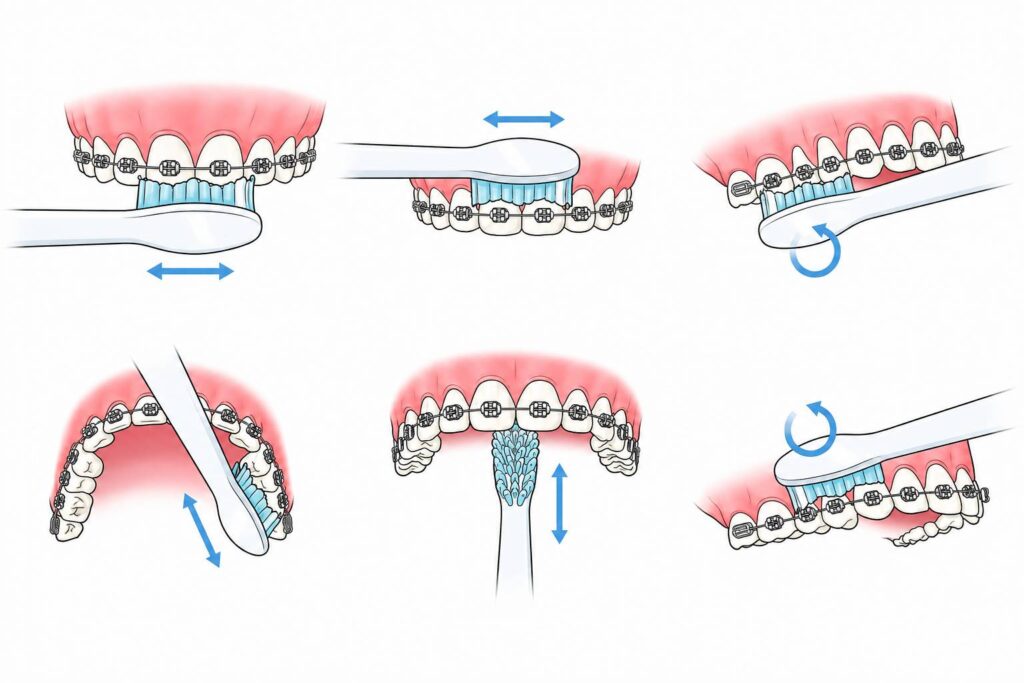
You will notice that it is much harder to keep your teeth clean with braces. Food compacts in the brackets and between your teeth and can only be removed by brushing and flossing. If plaque remains on the teeth for any length of time, it will leave a permanent white spot on the tooth. Brushing after meals should become part of your daily schedule. Use a soft toothbrush at a 45-degree angle to the tooth with medium pressure, brushing in small circles above and below the brackets. Completely clean each surface of every tooth in your mouth, including the areas above, below and between each brace. Each surface of every tooth should be brushed with 10 strokes of the toothbrush. This should take 2-3 minutes.
Your toothbrush will wear out faster because of your braces, so be sure to replace it whenever the bristles start to fray, generally every 3 months.
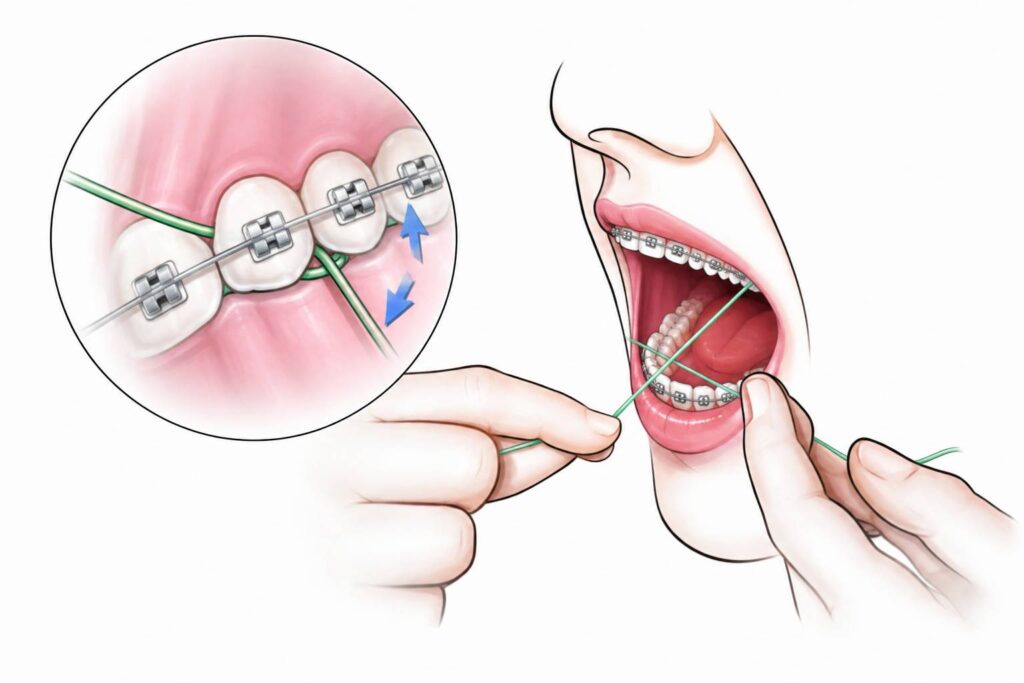
Flossing is more difficult when you have braces on your teeth. A floss threader may be needed to get the floss under the arch wire. Use a piece of floss about 30cm long. Use the floss threader to get the floss under the wire. Slide the floss up and down along the tooth surface. Be very careful to not pull with too much force on your arch wire.
This process will take more time than flossing without braces. If your gums are not healthy, they may bleed the first few days you floss. Remember that consistent brushing and flossing will result in a great smile!
Interproximal brushes are also used to clean around brackets. ask your dental hygienist or therapist to show you how to use them.
During orthodontic treatment your teeth are more at risk of getting tooth decay. Talk to our hygienist or therapist about ways of reducing the risk of tooth decay by using a fluoride mouthrinse or tooth mousse.